Mental health awareness has risen in recent years, with the effects of such illnesses and disorders becoming more prominent in cultural osmosis. One common action that accompanies mental illnesses, like depression or anxiety, is self injury. Self injury is defined as the act of hurting oneself without suicidal intent, being a symptom of extreme emotional distress. It’s often done as a coping mechanism to regulate feelings too heavy to manage without help. Throughout March, it’s hoped that awareness can be brought to this issue.
Self harm is often not something easy to spot when it’s occurring. Despite this, almost 17% of all people will self harm in their lifetime, as reported by The Recovery Village. When looking to the National Library of Medicine for a statistic, they report a 4-24% rate of self harm in adolescents. As seen in the discrepancy from the two sources, reports on self injury aren’t readily available as it’s difficult to come forward about that hardship in the first place. This goes to show that this disorder is one that is not given enough attention, even with the damage it does to one’s mind and body.
It’s not just that self injury is not well recognized in the public consciousness, but it’s the attitudes towards it that prevent people from getting the help they need. This disorder is often demonized, with many seeing the people that engage in this coping mechanism as “strange,” or something to gawk at. They’re asked degrading questions about how they got their injuries, or are openly mocked. This is an experience that people who are suffering face all too often, only finding comfort in sharing these pains in online circles. It makes them too ashamed to open up and seek the help they need.
What those who struggle with self harm need is kindness and understanding. Their practices are destructive and could seriously hurt them, but hammering in that fact does nothing to aid them. As a friend, family member, or even classmate to someone suffering, one of the things you may do to help is let that person know that what they’re feeling is valid, including harmful feelings. In the end, no feeling is invalid, and all emotions should be recognized to properly help someone. By just being there, it could lessen their suffering. Still, it’s just as important to recognize that you can only do so much to help. A person who self harms in many cases needs professional help to learn how to cope in a healthy manner and heal from what ails them.
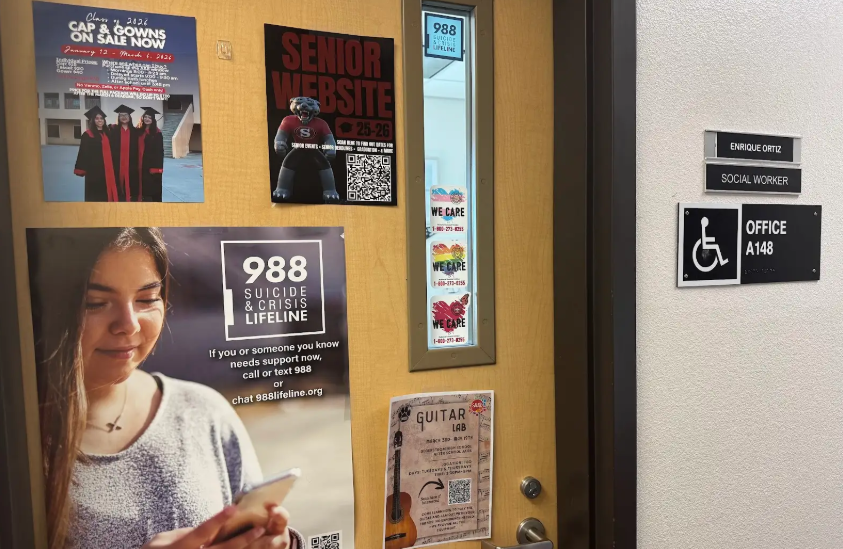
Segerstrom has many resources to aid those grappling with this problem, with a well-equipped counselor team and social services to help students manage those urges and learn healthier ways of dealing with extreme distress. A student’s own counselor is an invaluable resource, as they can help students connect to better trained professionals. Amy Miller is the Education Related Mental Health Specialist at Segerstrom, located to the back and right of the counselors office, and may help with students whose mental health is diminished by current school life. Enrique Ortiz is the school’s social worker, providing a place to talk through feelings and overall support. Mr. Ortiz can also help kids get in contact with outside, short term or long term therapists and psychiatrists.
But, for those who are not yet ready to seek out help, there are many ways of slowly reforming that harmful behavior. Some distraction techniques recommended by the Cornell Research Program on Self-Injury and Recovery are to externalize anger at oneself onto objects, such as punching inanimate objects, or ripping up paper. To imitate feelings of pain, there are spiked sensory objects people can purchase and grip, ice can be held, or sour and spicy foods can be eaten.
Even if self injury doesn’t kill someone, it’s incredibly damaging for their psyche. It’s important to seek help and learn healthier alternatives before the issue grows past non suicidal injury. According to the CDC, there have been 616,000 emergency room visits as a result of self injury within the year. While it may help with coping in the moment, self harm is an issue that can only get worse. If you’re struggling with self injury or someone you know is, please look into the above methods of healing or reach out to your counselor. It’s never too late to get better, and no one is completely defined by the harm done to them.